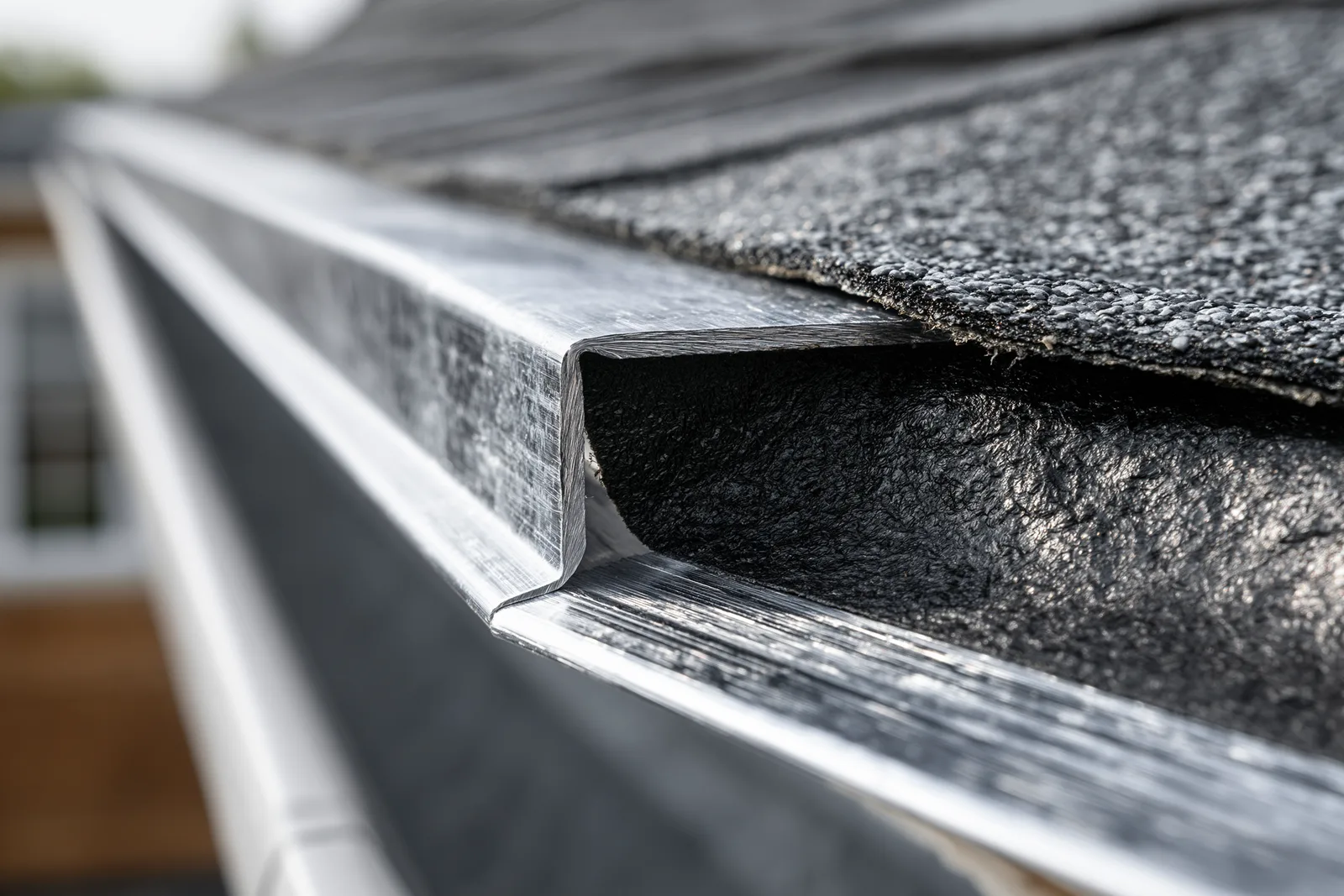
When you replace the shingles, the metal around walls, chimneys and roof edges needs its own decision. New shingles do not make worn flashing new again. Some sound metal can remain, but only if it fits the replacement roof and can be connected correctly.
That decision belongs in the replacement scope before work starts, with room to address damage uncovered during removal. Here is what we look at when explaining the difference.
Flashing carries rain across a change in the roof
Shingles cover the open slopes. Flashing directs water where that covering ends or meets another surface. Drip edge runs along the roof perimeter; step flashing connects shingle courses to a side wall. Around a chimney, several pieces work together to shed water past the roof opening.
Each connection needs the layers above it to drain onto the layers below. Replacing the visible shingles leaves those intersections to be addressed separately. A new shingle color or a clean-looking metal surface tells you little about the hidden overlap.
Reuse depends on condition and fit
Metal that is corroded, torn or distorted is a poor starting point for a new roof. We also check its dimensions against the replacement shingle. A piece that fitted the old courses can be too short for the new layout, even when the metal itself looks sound.
Removal matters too. Flashing can be damaged as the old roof comes off, and lifting it exposes the supporting deck for inspection. A decision made from the ground can change once those connections are accessible.
GAF’s metal-flashing guidance recommends replacement whenever possible and limits reuse to suitable, undamaged metal that fits the new system. Product requirements still govern the particular roof.
Wall and chimney details affect the work
At a wall, the roofing connection extends beneath the siding or other wall covering. The roofer needs enough access to reconnect the flashing without leaving rain a path behind it. That can make the work more involved than replacing a loose piece visible from the yard.
A chimney also has an upper metal layer covering the top of the roof flashing. Its condition and connection to the masonry need attention alongside the shingle-side pieces. Replacing one part does not automatically rebuild every joint around the chimney. These details explain why two roofs with similar shingle areas can involve different amounts of flashing work.
The replacement scope should explain what stays
We explain which connections need new material, what sound components can remain and what can only be confirmed after removal. Deck deterioration or hidden damage should lead to a specific discussion about the added work, rather than being covered by the new shingles.
The useful question is not simply whether a price includes “flashing.” It is how the roof edges, walls, chimney and penetrations on this house will connect to the replacement covering. That keeps the conversation about the actual roof instead of a general allowance.
Our roof replacement page explains the wider project, from removal and decking through installation. For one failing connection on an otherwise sound roof, the flashing repair page explains the smaller repair decision.
New shingles and a warranty are separate questions
A product warranty is not a substitute for sound flashing. Material-defect coverage and installation coverage address different problems, and the applicable terms determine the remedy. Keep the physical roof decision separate from an assumption that a new shingle warranty covers an old connection.
If replacement is on your mind, you can request a free roof inspection without deciding in advance which metal stays. We can start with the roof and explain the work its connections need.