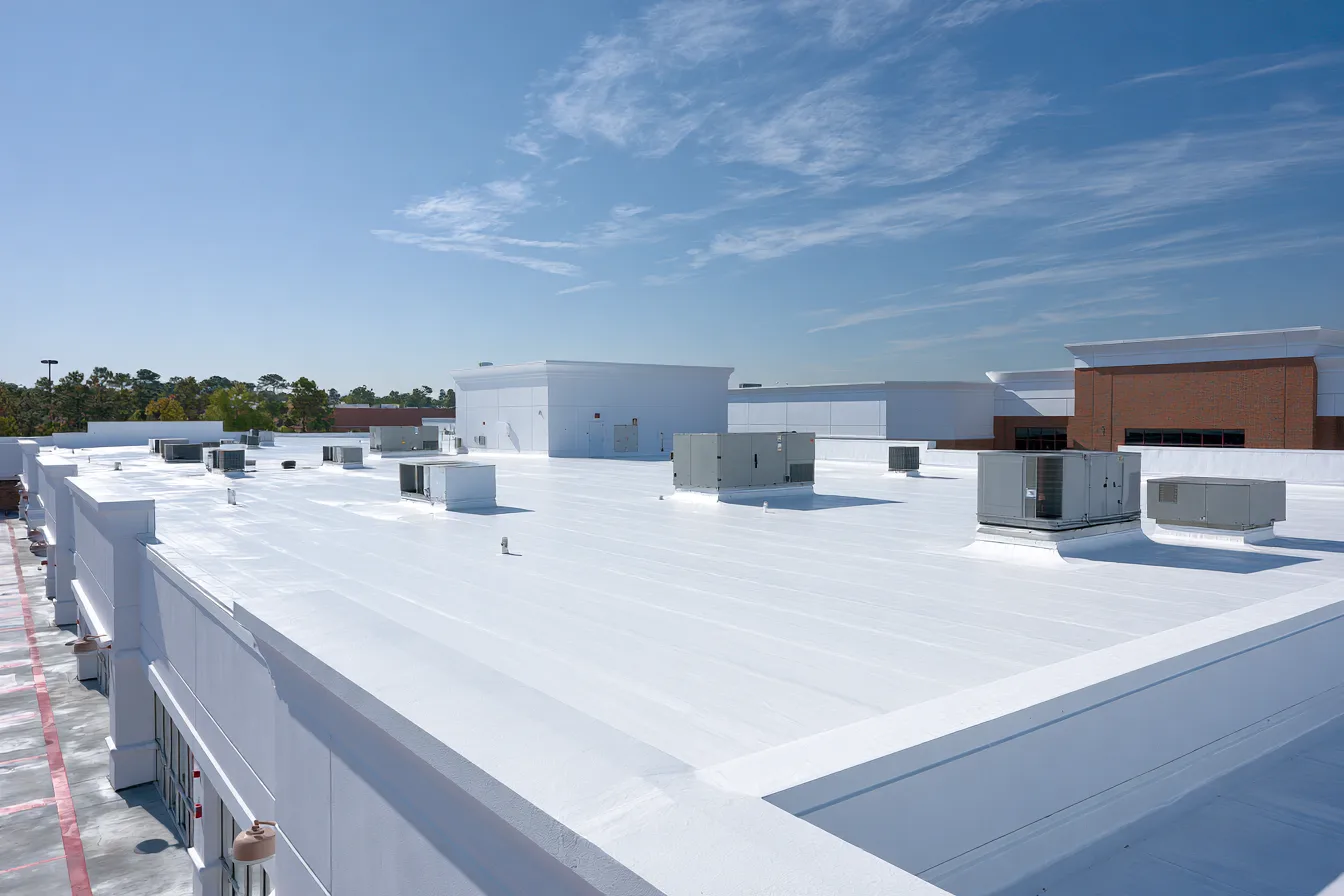
Flat roof repair in Corinth, TX
A low-slope roof leak can involve a seam, a drain, wet insulation or several connected details. Get Corinth flat-roof repair scoped around the actual system and the way water leaves the building.
A flat-roof leak needs a drainage check
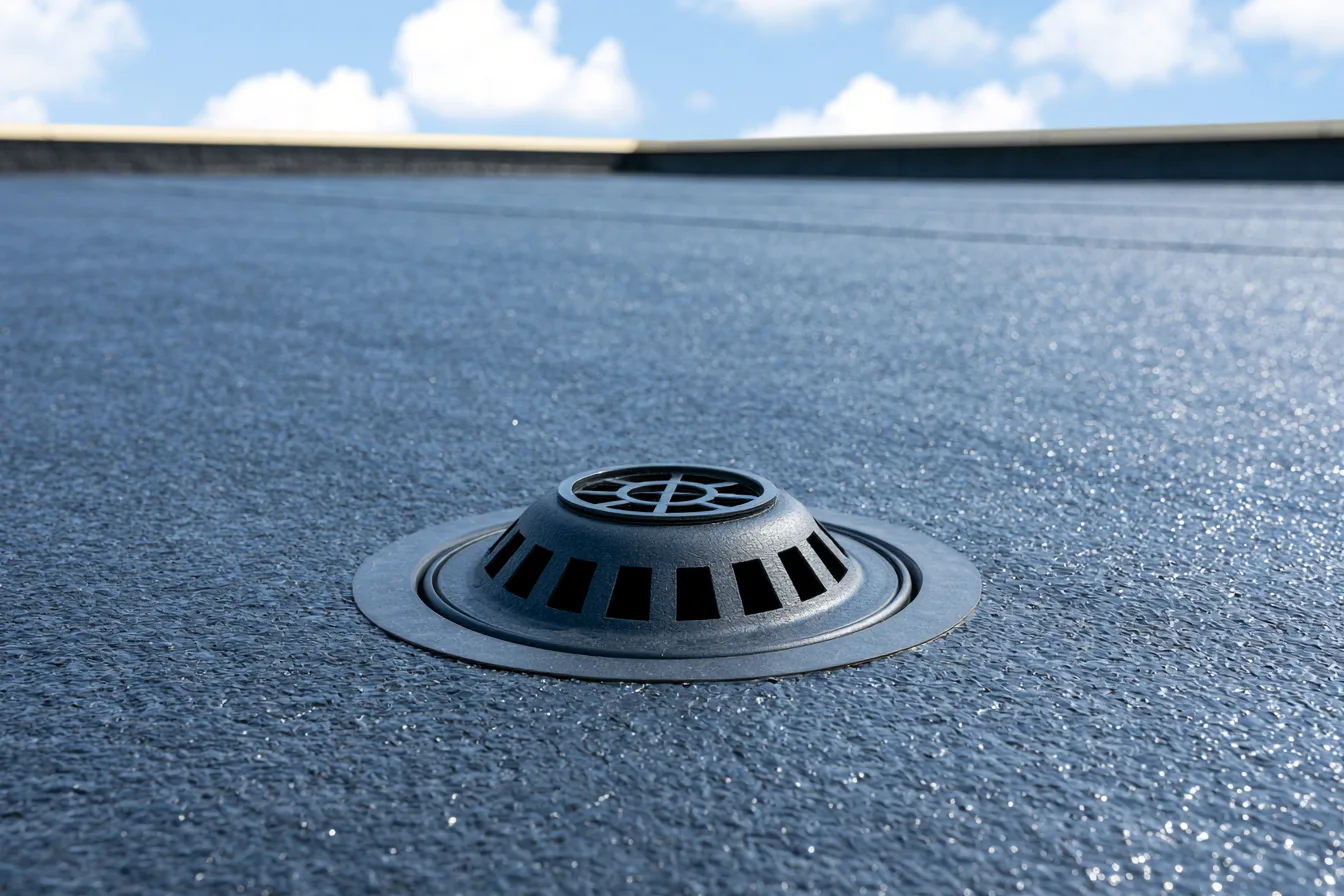
A roof called “flat” still needs a route for water to leave. Drains, scuppers and perimeter outlets work with the roof’s slope to carry runoff away. When water remains in an area, the assessment needs to distinguish a blocked outlet from a low section or an underlying support problem.
Water collecting on the roof can expose seams and flashings for longer, but the location of a puddle alone does not identify the indoor leak. The covering and the nearby details still need examination. Clearing debris and repairing a damaged membrane are separate tasks.
We help Corinth owners and managers consider the immediate repair alongside the condition of the roof that remains. The useful question is whether the repair can connect to a sound assembly and restore the intended water path.
- Identify the system
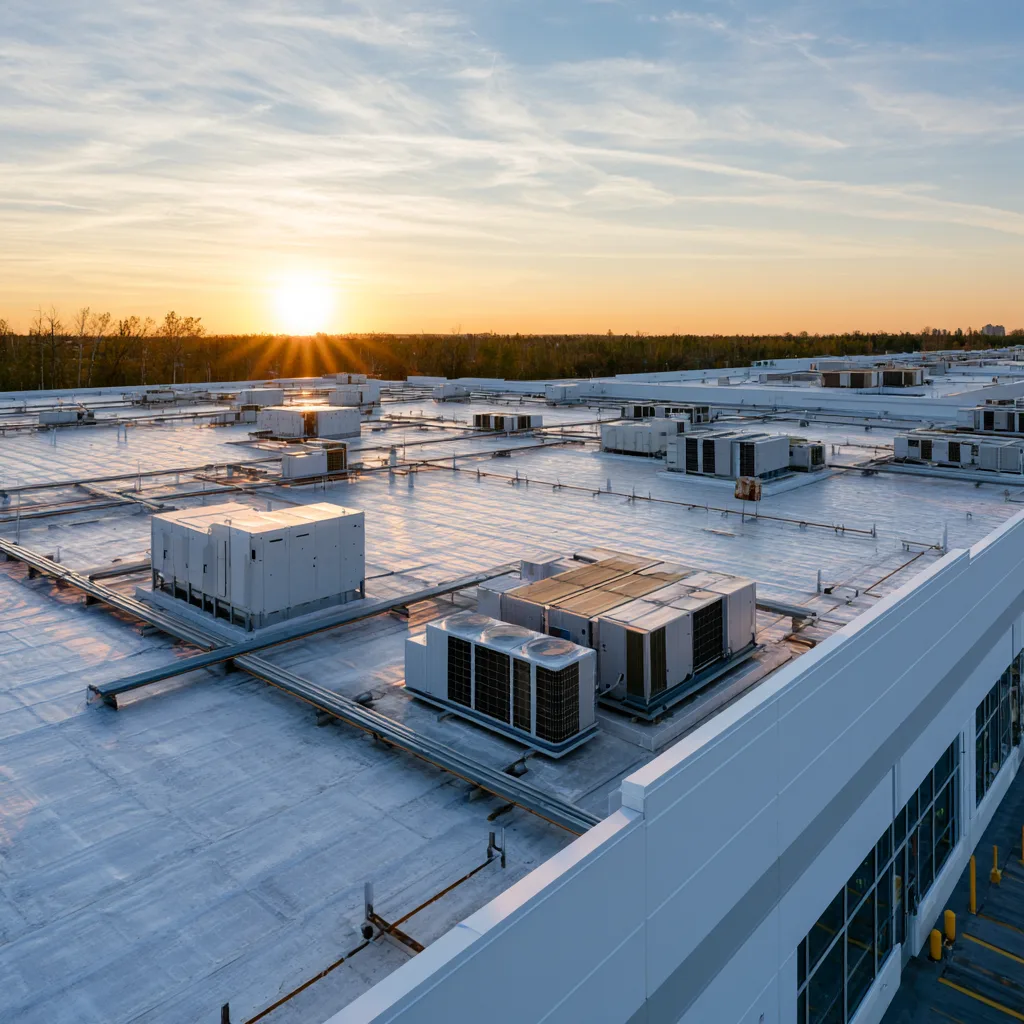
- White or black appearance alone does not establish membrane type.
- Check the outlets
- Look at drain condition, obstructions and the route to each outlet.
- Consider hidden layers
- Wet insulation or damaged support can extend beyond the opening.
Repair the right low-slope roofing system
What flat-roof repair includes in Corinth
The scope follows the failed detail and the material around it. Some repairs remain at the surface; others need affected layers removed.
Seams and penetrations
Open seams, punctures and damaged pipe or curb flashings need a repair that fits the membrane. The connection should reach sound material rather than bridge loose or contaminated surfaces.
Drains and perimeter edges
Drain connections, scuppers and edge terminations must join the membrane securely and keep water on its intended route. Correcting a blockage does not repair a torn drain flashing or a loose perimeter.
Wet layers beneath the surface
Water can spread into insulation or damage the deck. Where layers are wet or unsound, the work must address them before the roof is closed. Covering them can conceal the problem rather than restore the assembly.
Access around building operations
Tenant entrances, loading areas and equipment service can affect staging and work hours. Discuss the occupied space and access restrictions when establishing the roofing scope.
When patching stops being practical
Our roof coatings guidance explains the dry, sound and compatible surface a restoration system needs.
Keep a serviceable roof working
An isolated failure with suitable surrounding membrane and support can justify repair. Correcting the affected detail and addressing a local drainage obstruction may preserve the useful roof around it.
Consider a larger scope
Repeated openings, widespread saturation, deteriorated material or failing attachment can make another patch poor value. Restoration requires a sound candidate; replacement may be needed when the assembly cannot provide one.
Corinth flat-roof repair FAQs
Does water remaining on a roof mean it needs replacement?
Not automatically. Outlet blockage, roof slope, insulation condition and structural concerns have different remedies. The inspection needs to establish the cause and its effect on the existing system.
Can a coating level out a low spot?
A roof coating does not create the slope and drainage of a rebuilt assembly. Any drainage correction needs to be considered separately before deciding whether the roof is a coating candidate.
Can the business remain open during repairs?
The answer depends on the affected area, roof opening, access and the activity below it. A practical work plan considers those conditions together, including equipment or entrance interruptions.
What information helps start the request?
The building address, location of the leak, current use of the affected space and any roof-system or repair records you already have. You don’t need to identify the membrane before calling.