Shingle options for Corinth roofs
Compare shingle profiles, construction and impact ratings for your Corinth roof. Understand what changes the appearance and what still depends on the complete installation.
Choose more than a shingle color
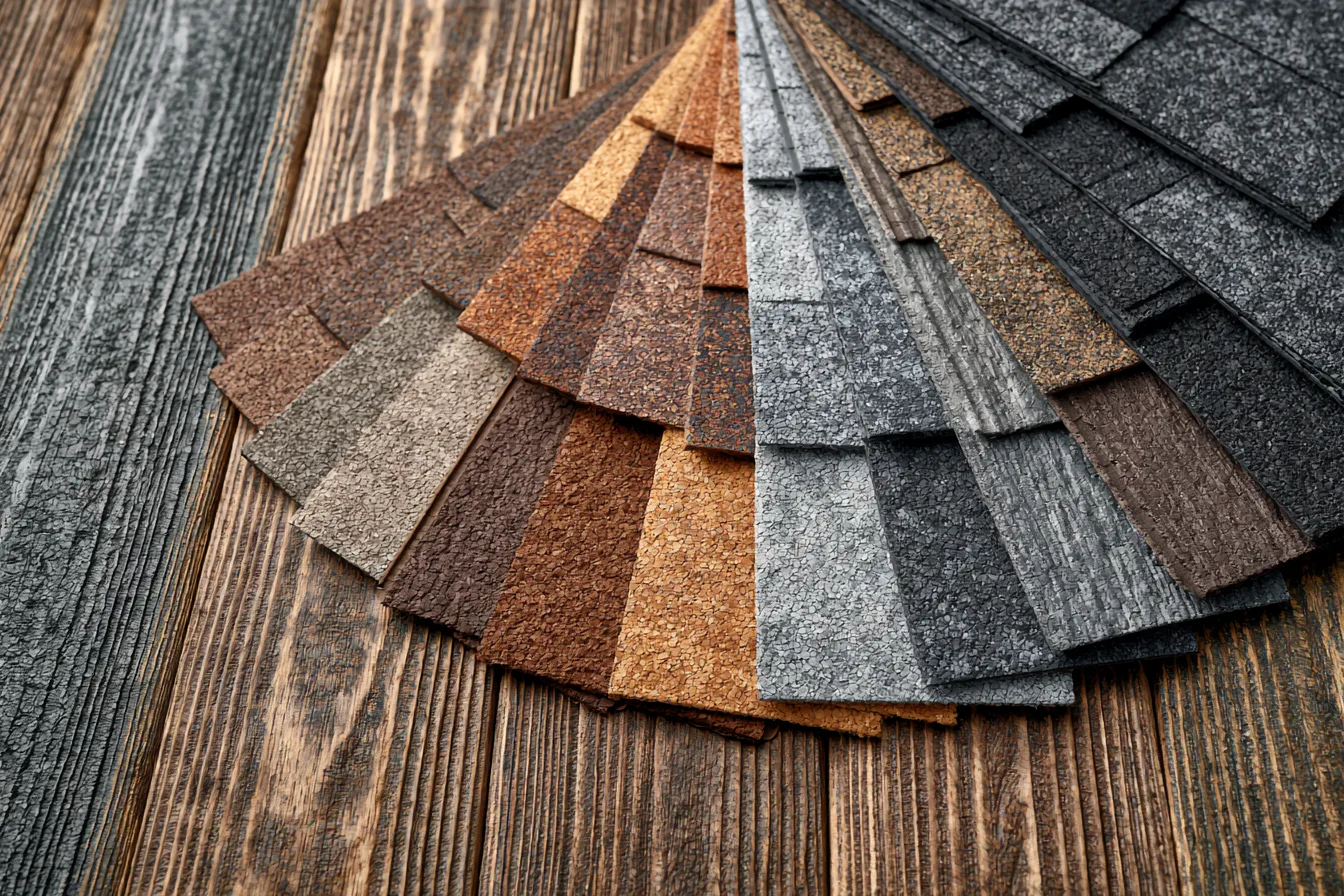
A shingle sample answers a color question, but it cannot answer every roof question. A flat three-tab pattern, a layered architectural profile and a designer shape give a house different visual character.
Impact resistance is a separate product characteristic. It comes from a specified test and classification, not simply from thickness, price or a dimensional appearance. That distinction helps you compare materials without assuming that a style name promises storm performance.
The chosen covering also needs a suitable slope, sound support and the right roof details. Use the comparisons below to narrow the material discussion, then connect that choice to the roof on your house.
Compare shingle types
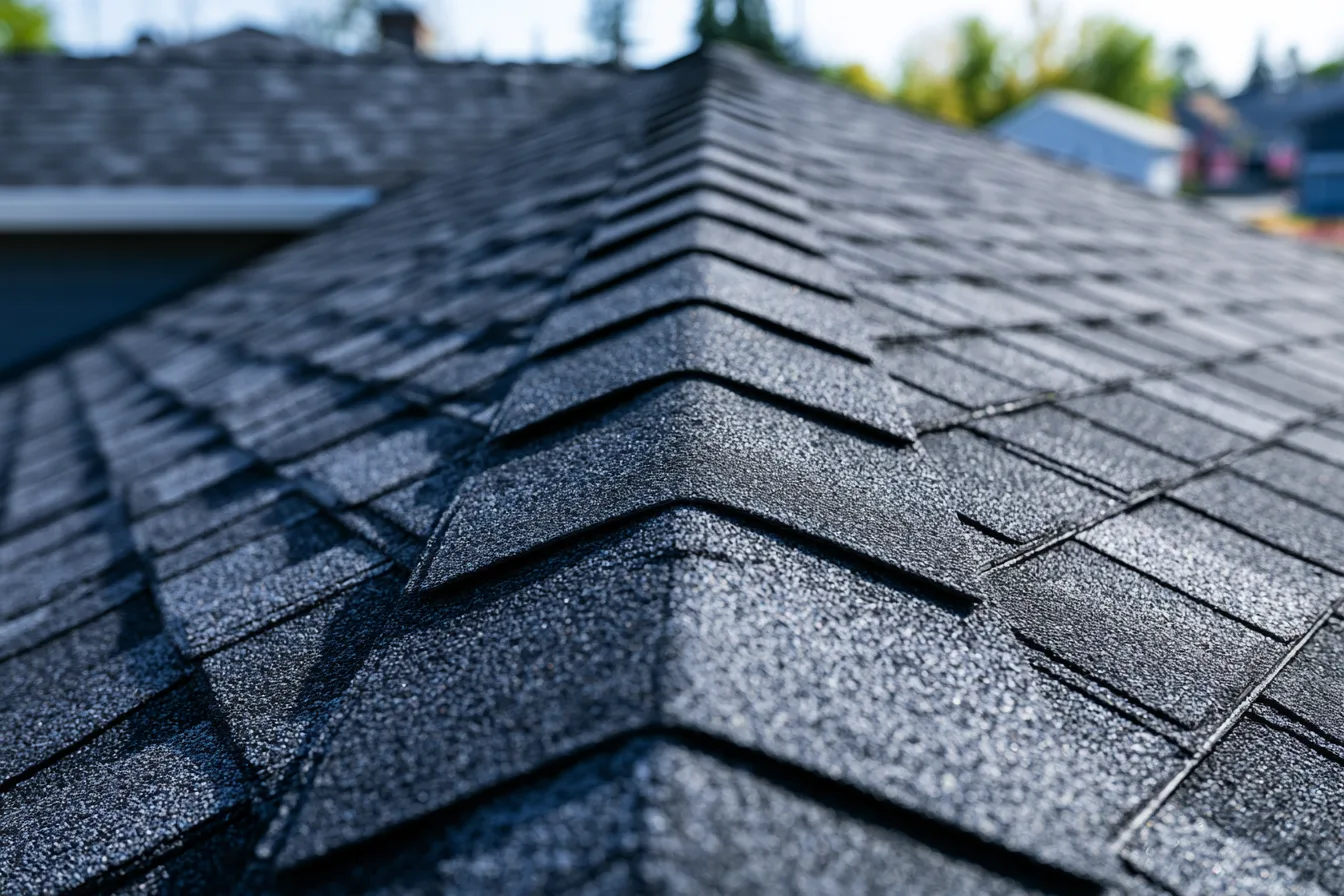
Select a profile to read how its construction and appearance differ. These photographs illustrate roofing styles, not a particular product or impact classification.
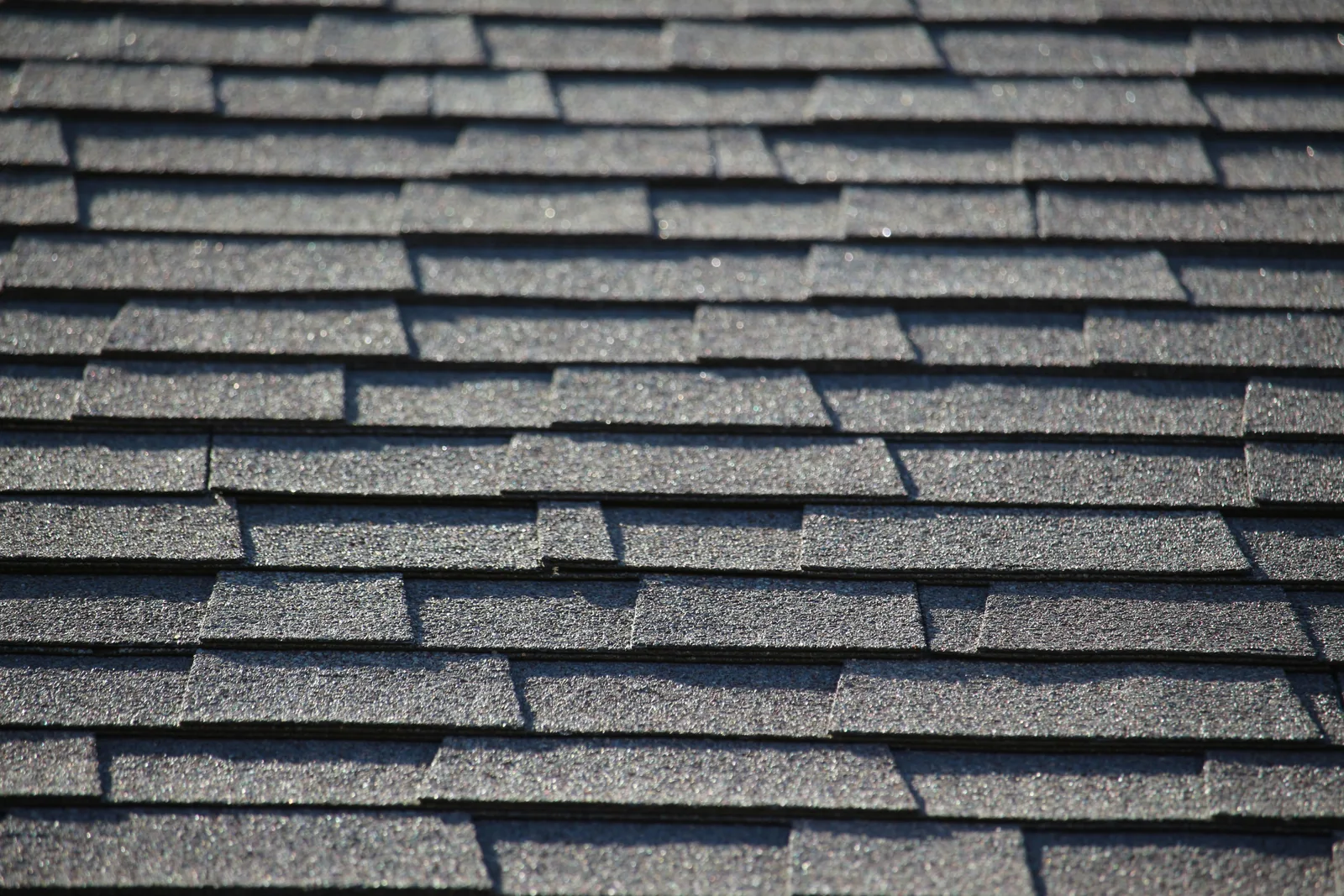
Three-tab shingles
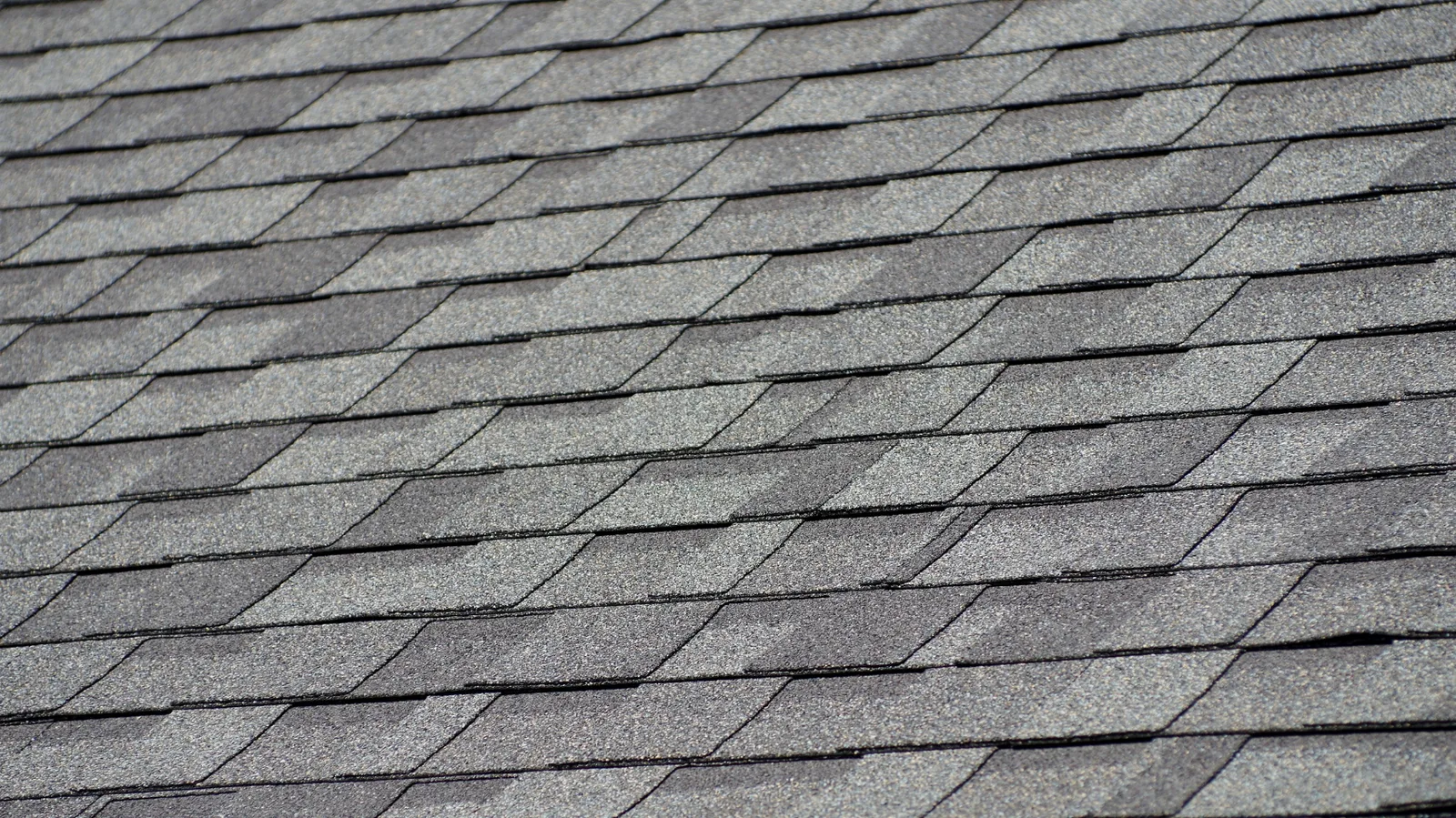
A three-tab shingle is a single-layer strip with cutouts that create a regular pattern. Its flat appearance can suit a house that calls for simple, even roof lines.
Product availability, the existing roof and installation requirements still matter. A repair needs compatible material; choosing a similar-looking rectangle is not enough to establish that fit.
Architectural shingles
Architectural, laminated and dimensional are names used for shingles built from multiple layers. Their overlapping profile creates depth and varied shadow across the roof.
They come in different colors, profiles and product ratings. An architectural appearance does not automatically mean a particular impact class, and the selected product’s requirements still govern its installation.
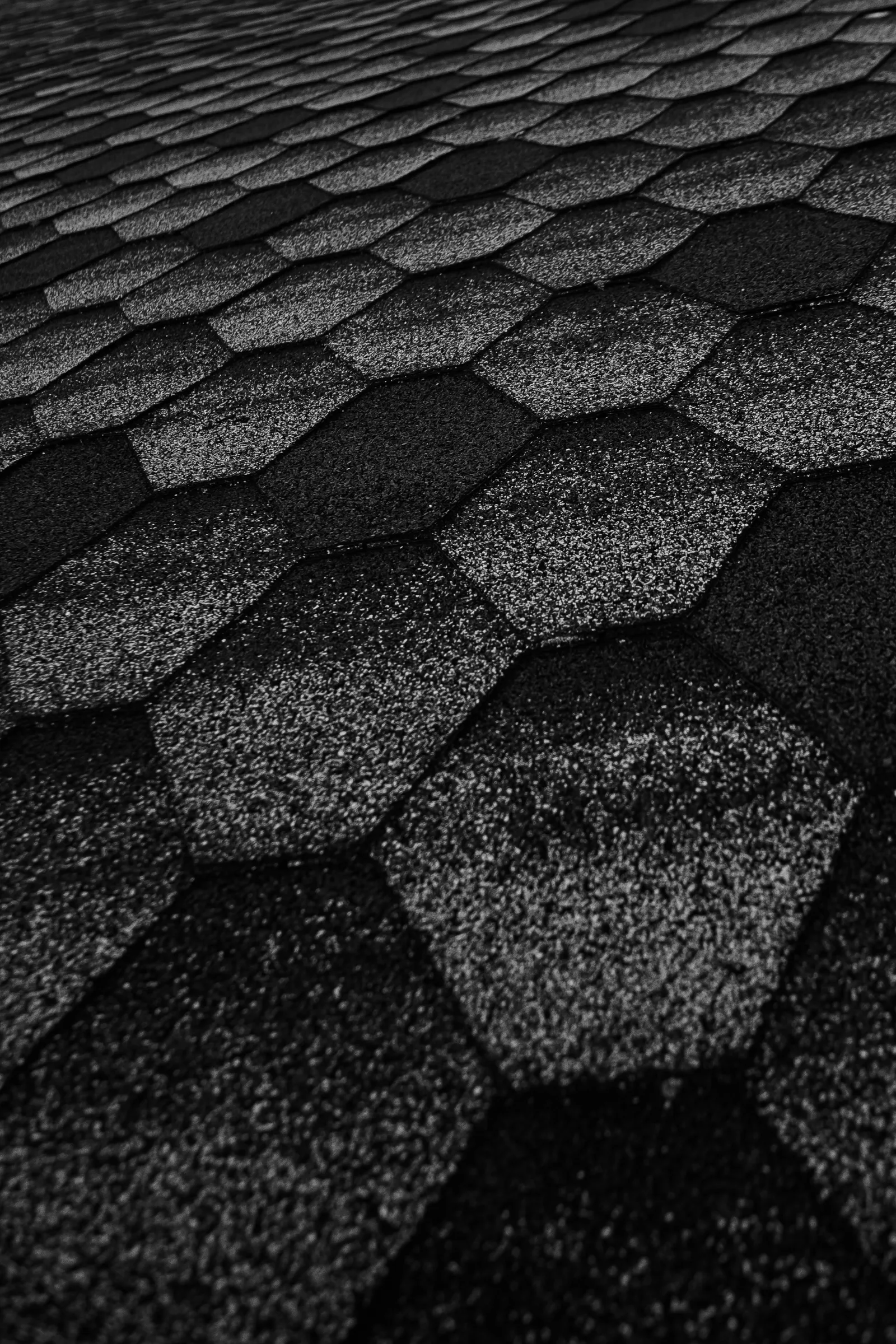
Designer shingles
Designer asphalt shingles use more distinctive profiles, sometimes echoing slate, shake or patterned roofing. The roof’s size and slope affect how strongly that pattern reads from the street.
The specific product may change material cost, installation details and the appearance of accessories. Compare the whole roof, including ridges and edges, rather than judging only one field sample.
Appearance, testing and installed performance
GAF’s impact-resistance explanation describes the laboratory classification and its limits. Product packaging and current documentation identify the actual rating.
Match the shingle choice to the roof
The selected material is part of a roof assembly. Our roof replacement service explains the removal and rebuilding work around it.
Slope and support
Asphalt shingles need the slope and underlayment prescribed for the product. A low-slope porch may need a different assembly from the main roof. The deck must provide suitable support and fastening.
Flashing and attic airflow
Walls, pipes, valleys and roof edges still need correctly connected details. Ventilation needs an appropriate intake and exhaust arrangement; changing the shingle does not resolve a blocked attic air path.
Appearance and approvals
Color looks different in sun, shade and beside brick or siding. Compare an actual product sample in the setting where possible. Any property-specific material approval should be resolved before ordering.
Shingle option FAQs
Are Class 4 shingles hail-proof?
No. Class 4 is a laboratory impact classification, not a promise that every hailstorm will leave the roof undamaged. The actual product’s classification and warranty limits matter.
Does impact resistance guarantee an insurance discount?
No. Insurer eligibility and policy terms vary, and a discount may come with coverage conditions. The insurance decision should be confirmed for the specific roof and policy.
Why do shingles look different from the small sample?
A whole roof shows repeated pattern, shadow and color variation over a much larger area. Light, viewing angle and nearby exterior materials also change how the color appears.
Can a repair use a different shingle?
The replacement needs to be compatible with the existing roof. Size, thickness, fastening and exposure matter as well as color. If adjoining material cannot be worked with, the repair boundary may need to grow.